in populated air
our ancestors continue
i have seen them
i have heard
their shimmering voices
singing
-Lucille Clifton "in populated air"
August is thick y'all. Air heavy with memory and insight to be sifted through our careful breathing, catalyzed with lemonade and late nights. Here in Durham every year QBG Nia initiates a process of Black August Haikus reminding us daily of the Black revolutionaries born and lost in the sacred month of August. August is thick with responsibility and our ancestors are here giving us unexpected lessons to respond to with our own open changing hearts.
Feel eternity condensing on your skin? Welcome sweat as purification, where our mostly water bodies can evaporate into air, communing with air, opening our pores for that wisdom just beyond the limits of our bodies. Take it in. Let it out.
August is as thick and dense as Blackness y'all, as diverse and revolutionary and transformative as we make it. And on August 2nd James Baldwin...Black queer genius revolutionary...champion for the freedom of QBG Angela Davis...brilliant badass rage-filled loving author would have been 86. Here in Durham we gathered on Sunday August 1st to praise his name. Check out the video here!!!
http://vimeo.com/13854131
How are you hearing the ancestors right now? What ancestors are speaking to you? What gifts and challenges do you want to thank them for? Join the conversation here: http://grou.ps/
Speaking of populated air...remember that our cyber-community is on the move. QBG Moya will be shutting down the old Ning on Monday August 23rd so be sure to bring all of your images, music, etc over to the new site (especially you all star DJ's...ahem QBG Leah...)!
Also remember that we serve our ancestors by loving each other proactively. Check out the Me and My Sis Foundation for ways to be in supportive love with Black women all over the planet: http://www.
And for QBG's in Boston be sure to check out Queer Women of Color and Friends WEEK during this first week of August.
http://www.qwocboston.org/
I can tell you first hand that the QWOC crew creates exciting affirming spaces and events and dance parties definitely designed to help you sweat it out! Take pictures! Tell us how it went!!!
And most importantly stay hydrated centered and present!
Happy Black August y'all!
infinite love,
QBG Lex
.jpg)
Tuesday, August 3, 2010
Thick August Wisdom: Sweat Revelations

Who You Callin A Bitch?: Reviewing Helena Andrews’ Bitch is the New Black
Sent to you by moya via Google Reader:
I don't believe bitch is the new Black, anymore than I believe that 30 is the new 20. As our most recent racial shenanigans have reminded us, Black is still its same ol' Black self. And anybody who engages in the same shamtastic behaviors at 30 as she did at 20 is just plain trifling. That said, I think y'all should check out Helena Andrews recently published memoir Bitch is the New Black.
We know good and well that it ain't easy out here on single Black women. And the Tyler Perryization of Black women's lives has made it possible for the likes of Steve Harvey and every other jackleg Black relationship expert to capitalize on our story but us. Since Black women are always represented as loud, sassy, and inappropriate, our silence has been deafening. It's high time that we get bell hooks with it, and start talking back. Helena Andrews has done that masterfully.
Hers is a delicious Black girl story, one that hits so many familiar notes, that you are transported episodically to different moments of your own life to recall how you handled a similar situation—family conflicts between your mom, your grandmother and your aunties; your first cheating lover; a pregnancy scare; a ridiculously stressful and uninteresting first job; your first encounter with the domestic abuse of a loved one; your love affair with the Cosby Show. And yet, Helena Andrew's story is also all her own, unique, self-contained, filled with the kinds of idiosyncrasies, that remind us that we are not the same, no matter how many two-dimensional portraits of ourselves we encounter daily. So here we learn what is like to be a Black girl reared by a lesbian mother, in a family that associates same-sex love with pedophilia. We encounter a bohemian Black girlhood, one associated with movement, not because of poverty, or military life, but because of her mother's need for new surroundings. For the adult Helena, this translates to a life of literally walking the walk. She doesn't drive and has no interest in learning, even after two muggings. And when she isn't walking it out, homegirl Helena is talking it out, in classic Black woman fashion, with an endless string of refreshingly familiar girlfriends and colorful female characters.
The text is, of course, not without its hiccups. But then, neither is the path of a professional Black woman approaching 30. There are moments when the transition from e-chat speak to text are choppy and disorienting. That's a technical issue. There is, however, also the sense that while Andrews grew up with a lesbian mother, she wants us to be very clear that she's as straight as they come, whatever that means. There are thus endless recourses to referring to the most mundane of things as being "so gay," or as in a chapter called Trannygate, referring to a transchick as "the she-man…name unnecessary." Uh, not cool. Andrews certainly didn't need to get didactic with it, but her own childhood put her in a unique position to represent queer folk humanely and heterosexual dating in ways that might have avoided such strident heterosexism. That said, I know now in a very real way how much courage it takes to let others into your life, particularly among sisters who can sometimes be the worst critics among us, and so I refuse to be overly critical of this book. I don't promise that you'll like everything in it. You might even dislike the author, given her self-professed bitch tendencies. But what she has proved is that our stories matter; and if you don't like hers, write your own.
This is a book for every Black woman who's ever needed to read, hear, feel, breathe another sista's story… a book for every girl who's ever dealt with inappropriate sexual conversations from a mother who's trying to be hip, an ex-dude with stalker tendencies, or a dead-end relationship that kept you pinned down because the sex made your toes curl. And while, Andrews has her admittedly bitch moments in this book, she does not shy away from admitting the vulnerability that informs those moments, or from brutal, gut-wrenching honesty in general, even when it means discussing the suicide of a close Black girlfriend, in a culture where strongblackwomen just don't do that.
When I heard about this book, last Fall, and its title, I approached it with the same skepticism with which I approach Tyler Perry movies. I didn't need to have anyone else calling me a bitch just because I'm educated, especially not a sista. Unlike TP, however, this text does not disappoint. When you read this, you will know that there's another Black chick out there, who's slogging through it, who's working it out, perhaps very differently from you, but who ultimately gets it.


Things you can do from here:
- Subscribe to The Crunk Feminist Collective using Google Reader
- Get started using Google Reader to easily keep up with all your favorite sites
Monday, August 2, 2010
Today in Post-Race History: Montana Fishburne
Sent to you by moya via Google Reader:
 Several weeks ago, I had planned on writing the NAACP in an effort to convince them to ceremoniously bury the term post-race the way they did the word nigger a.k.a "the n-word" a few years ago. Then the whole Shirley Sherrod debacle happened, and I decided that obviously the NAACP's race card had been suspended, therefore making them barely qualified to issue brown paper bag tests let alone march around some midwestern city long abandoned by industry, singing dirges for problematic words that are just impolite to use. On Friday, I was glad I put to brakes on becoming pen pals with the NAACP. I may need to use the term post-race–and not just to be a sarcastic bastard.
Montana Fishburne, the 19-year-old daughter of Laurence Fishburne, has decided to release a sex tape. According to reports, Ms. Fishburne intends to follow in the stiletto steps of women such as Paris Hilton and Kim Kardashian:
"I've watched how successful Kim Kardashian became and I think a lot of it was due to the release of her sex tape by Vivid," Fishburne said in the press release." I'm hoping the same magic will work for me. I'm impatient about getting well-known and having more opportunities and this seemed like a great way to get started on it."
If I may echo Cee-Lo, you don't shock me anymore. And though at some point in ancient history the idea of making a sex tape to get famous seemed illogical, in this lifetime Fishburne's rationale is not immediately absurd.
I don't intend to engage in some (Moynihan-esque,) this girl got Daddy issues type of conversation; I'll let commenters on other blogs handle that. I'm also not interested in a broader discussion on pornography. I'm not against people getting paid for having sex. That is another discussion, for another time.
What strikes me about Ms. Fishburne's thinking is how classically post-race/colorblind it seems. She sees no difference between Kim Kardashian and herself. Fishburne is arguing that since she's the daughter of a rich and famous man, then she might engage in the same kind of behavior that the daughters of other rich and famous men have and expect the same results. Being a young black woman does not give her pause. The discourse on black women's sexuality, about their lasciviousness and their Jezebel nature does not apply. Montana has no use for that history, because perhaps she was raised to think that little black girls are just like anybody else.
Is the logic behind Montana Fishburne's sex tape not a post-race dream?
Tell you one thing, if Montana Fishburne gets a reality television show on E!, racism might be over, and I'll have a non-sardonic reason to employ the term post-race.
Where in the world is Jaimee Foxworth when you need her? (Smoked out.)
Things you can do from here:
- Subscribe to Black Youth Project using Google Reader
- Get started using Google Reader to easily keep up with all your favorite sites
A Broken hearted feminist
Sent to you by moya via Google Reader:
Okay, so now that I have shared with you the trials and tribulations of coming out to my mother, the difficulty of working in an often homophobic academic environment and revealed my most un-feminist moments, I feel like we're friends now. I mean, you sure do know a lot about me. Some things you may not know about me: writing terrifies me, I'm so private that Facebook freaks me out on a daily basis, and I'm actually quite shy. But now that we are friends, and I have invited you into my life, I feel like I can share some more.
So…Crunkista has had her heart broken, torn straight out of her chest, and trampled on by many a woman. Each time it happens, I dramatically ask myself "WHY ME? WHYYYYYYYY?" Is it me? Am I asking for too much? Is compassion, loyalty, kindness, maturity, love, respect, feminist/progressive ideals, and friendship too much to expect from another person? The most important question: why do I keep dating different manifestations of the same woman?
So, as I ponder on my fate as a brokenhearted feminist, and after yet another trifling disappointment, I am forced to bring back and share with you my foolproof "How to get over my ex checklist":
To Do List
• Cry. A lot.
• Listen to Jill Scott's live rendition of "Love Rain." On repeat. Why? Because, "You broke me, but I'm healing."
• Become extra diligent at work. It keeps your mind busy and will only make your boss appreciate you more.
• Call on your girls. Like true friends they will always tell you that "she was indeed a fool, that you are pretty damn-near perfect, and that it was undoubtedly her loss."
• Get yourself a therapist. S/he definitely won't tell you that you are perfect and may help you sort out through a lot of issues. Objectively.
• Don't call your mother. She will only tell you that this would have never happened, had you dated a man. Don't call her. **Disclaimer: many mothers are feminist/supportive but when it comes to my sexuality, mine just isn't there yet. Hopefully, one day she will be.**
• Spend ridiculous amounts of time at the gym. Endorphins are like crack. Whether you are working up a sweat or watching other people work up a sweat, it will at least get you out of the house. More importantly, moderate physical activity is good for your mind, body and spirit.
• Stop checking her Facebook page. Seriously. Stop. In fact, delete her from your Facebook friends. Delete all of her friends too. Within the very small queer community this can get complicated and sometimes may result in severe loneliness. But, trust me. Updates of pictures of your ex with a new girl (less than a week after the break up) may send you into uncontrollable fits of rage, despair, and unhealthy criminal fantasies. You do not want to be the next woman featured on Snapped.
• Watch out for the inevitable and unfortunate rebound situation. You may not be in the right emotional space to really accept another person. This is sometimes damn near impossible to do because that black hole in your heart needs some serious distraction. But don't say I didn't warn you.
• Reread your favorite books. Alchemist here we go again.
• Do something you have always wanted to do but for whatever reason didn't. In my case, taking salsa classes has been my saving grace. I have a new found family of left-footed misfits who make me laugh at least twice a week.
• Cry some more. Sometimes you won't even know why but you just have to.
Lately, and like I said after "yet another depressing disappointment," my "fool proof" list isn't enough and I need to do something truly feminist. I need to ask for help. I need to call on my sisters because I need some real feminist answers. So I ask you, friend, how do you mend a broken feminist heart?


Things you can do from here:
- Subscribe to The Crunk Feminist Collective using Google Reader
- Get started using Google Reader to easily keep up with all your favorite sites
Climbing PoeTree, on a Long, Summer’s Day
Sent to you by moya via Google Reader:
Some days are so long. Some days being an activist takes all the energy you have, and some that you don't. Some days you get up in the morning and think about the moment, 12, 14 or 16 hours later, when you will get to be still again. But sometimes, on those long days, there's an unexpected gift from the universe.
Yesterday was, for me, a very long day. A day full of long strategy meetings, wonky conference calls, sticky summertime heat, and subway cars with no air conditioning.
But then, many hours on, the day found its purpose. At a fund-raising event for a women's human rights group, held in a community garden on the lower east side of Manhattan, at about 9pm I heard 3 poems from Climbing PoeTree. They made the entire day worth it.
They are Alixa and Naima, two fierce poets/activists/artists/visionaries who spent the past year touring the country with a show called "Hurricane Season: The Hidden Messages in Water." See for yourself.

They read, among other poems, "Being Human." You can read it below, but I urge you to listen to it in Naima's own voice here (Just click "Listen.")
If you've had a long day of your own, what you need is just this kind of visionary thinking and beautiful imagery, and unrelenting faith in the power of art that can change the world. Enjoy.
BEING HUMAN by Naima
I wonder if the sun debates dawn
some mornings
not wanting to rise
out of bed
from under the down-feather horizon
If the sky grows tired
of being everywhere at once
adapting to the mood swings of the weather
If the clouds drift off
trying to hold themselves together
make deals with gravity
to loiter a little longer
I wonder if rain is scared
of falling
if it has trouble letting go
If snow flakes get sick
of being perfect all the time
each one trying to be one-of-a-kind
I wonder if stars wish
upon themselves before the die
if they need to teach their young to shine
I wonder if shadows long
to once feel the sun
if they get lost in the shuffle
not knowing where they're from
I wonder if sunrise and sunset
respect each other
even though they've never met
If volcanoes get stressed
If storms have regrets
If compost believes in life after death
I wonder if breath ever thinks
about suicide
I wonder if the wind just wants to sit
still sometimes
and watch the world pass by
If smoke was born knowing how to rise
If rainbows get shy back stage
not sure if their colors match right
I wonder if lightning sets an alarm clock
to know when to crack
If rivers ever stop
and think of turning back
If streams meet the wrong sea
and their whole lives run off-track
I wonder if the snow wants to be black
If the soil thinks she's too dark
If butterflies want to cover up their marks
If rocks are self-conscious of their weight
If mountains are insecure of their strength
I wonder if waves get discouraged
crawling up the sand
only to be pulled back again
to where they began
I wonder if land feels stepped upon
If sand feels insignificant
If trees need to question their lovers
to know where they stand
If branches waver in the crossroads
unsure of which way to grow
If the leaves understand they're replaceable
and still dance when the wind blows
I wonder where the moon goes
when she is hiding
I want to find her there
and watch the ocean
spin from a distance
Listen to her
stir in her sleep
effort gives way to existence


Things you can do from here:
- Subscribe to The Crunk Feminist Collective using Google Reader
- Get started using Google Reader to easily keep up with all your favorite sites
Video of the day: The Story of Cosmetics
Sent to you by moya via Google Reader:
Thanks Jennifer for sending me this link!
Interesting. What are your thoughts?
The Safe Cosmetics Act of 2010 was recently passed to regulate what companies can put in personal care products. Click HERE for more information.
And click HERE for more information about The Story of Stuff project.

Things you can do from here:
- Subscribe to bglhonline.com using Google Reader
- Get started using Google Reader to easily keep up with all your favorite sites
Call For Submissions: Dear Sister: Letters to Survivors of Sexual Violence
Sent to you by moya via Google Reader:
Below is a call for submissions from Lisa Factora-Borchers of My Ecdysis:
"Survival is testament of someone's strength.
Healing is testament of the community surrounding her." –LFB
Call For Submissions: Dear Sister: Letters to Survivors of Sexual Violence
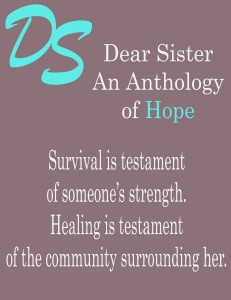
Dear Sisters
Dear Sister, edited by Lisa Factora-Borchers, is an anthology of letters and other works created for survivors of sexual violence from other survivors and allies. It is a collection of hope and strength through words and art.
The pathway for a survivor of rape and sexual violence is an unlit road of pain, isolation, and doubt. In the weeks, months, and oftentimes, years following, the healing process can be difficult to navigate without a community surrounding her. Imagine a compilation of literary arms bound together to offer words of understanding, solidarity, and love. Dear Sister is an accessible and inclusive offering of hope, voice, and courage; seeking writers and artists who wish to light a piece of that road and lift up other women in her healing.
It is an impossible task to write a letter to every survivor of rape, to every woman who lives with an invisible scar. Instead of thinking of the face of the person you are writing to, reflect on the image of an unlit path, a road with no clear footing. Your offering will be one light, among many, to make visible what was previously unseen, to illuminate what was hidden. You are providing a few more steps for someone to walk steadily toward their own recovery. Your words can be an anchor, a meditation, a prayer, a strong embrace or a gentle touch. The purpose of this anthology is not to retell stories of assault, but to help others regain a sense of balance and wholeness.
Mindfully move beyond what is commonly said and reflect upon radical companionship. Write what you wish for her to know and never forget. And if you lose focus, look deep into a mirror and reflect: What would you want to be told if you were in the darkness?
Information
Dear Sister primarily seeks letters but will accept poems, prose, essay, and drawn art that can be scanned for entry. Maximum word count is 1000.
Deadline for submission is November 1, 2010.
Women and transpeople of any race, creed, background, citizenship or non-citizen, ability, and identity are encouraged to submit their words and work to uplift others in the healing stages of post trauma and violence. Both English and Spanish are accepted. All questions can be directed to dearsisteranthology@gmail.com
Submission can be emailed as an attachment with "Dear Sister Entry" in the subject to dearsisteranthology@gmail.com.
Hand written letters can addressed and mailed to
Dear Sister Anthology
P.O. Box 202468
Cleveland, Oh 44120
Note from the Editor
Rape and sexual violence thrive in the silence of our homes and communities. Outreach must be wide and intentional if we are seek to hear from those who are silenced. Please forward this to as many individuals, groups, organizations, listserves, websites, and agencies that come to mind.


Filed under: Calls for Writing/Artistic/Workshop Submissions Tagged: sexual violence


Things you can do from here:
- Subscribe to INCITE! Blog using Google Reader
- Get started using Google Reader to easily keep up with all your favorite sites
jennifersbody:bloodveins:deadmarch
Sent to you by moya via Google Reader:
Things you can do from here:
- Subscribe to bitte ein kuss using Google Reader
- Get started using Google Reader to easily keep up with all your favorite sites
Black Male Privilege x Male Privilege
Sent to you by moya via Google Reader:
This piece is dedicated to Michele, T.Dot, John, and Pepe
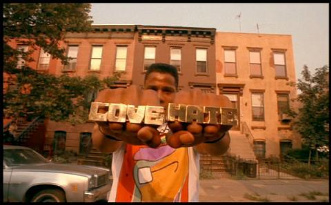
Shout out to Bianca for the above image.
While on an awesome date last weekend, Pepe hesitated, then proceeded to challenge me on the idea of Black Male Privilege. He didn't want to because he suspected that it would derail the date.
It didn't.
In fact I appreciated the conversation because he forced me to think of things I had not conceived of.
The first thing was a question which was "What is the difference between Black Male Privilege and Male privileges period, name some Black male privileges."
The first is that Black Men are born male in a society that is organized by and for men.
The second is that Black men (who read as heterosexual/straight) can go from point A to point B, from the train to the house without the risk of sexual verbal and physical violence. By sexual verbal violence I mean men yelling out at cars, men leaning into you as you walk down the street, hearing fifty eleven hey baby's, or can I get a piece of that.
Yesterday I had two confrontations with Black men.
9 either honked or said something.
One on Rhode Island and 3rd, the other a block from my house. It was hot, my skirt was short. In both instances these Negros were surprised that I spoke back. By the time dude said something to me near my house I had had enough. HE claimed that he was BEHIND ME ON THE PHONE TAUMBOUT he wanted to take me to Red Lobster. What he really said was that he wanted to take me to bed. He lied to kick and said he ain't say that, but you can't sprinkle sugar on shit and call it ice cream. I heard him.
The psychological costs of being treated like a sex worker on the streets is lightweight unspeakable.
The truth of the matter is that they would NEVER talk to White women like this loud, open and in public because they would be in jail as sure as rice is white.
For many Black men in the street, an attractive Black woman is prey to get at, not a human being returning from running errands so she can go home to write for the evening.
The privilege here is that they know that if they say it to us, more than likely they can get away with it, and that shit is wack sauce. Not the kid.
If you think that I am putting ten on two and that negro men don't really be fucking with us on the street see,
Black Woman Walking, by Tracey Rose
The college student who was shot in DC for not giving out her number
Hey Shorty, a Doc on Street Harassment by Girls for Gender Equity
Going back to Pepe's question, means that by being born male, they will benefit from the social structure that says that MEN naturally have the right to public space.
The right to earn more than women doing the same job. (statistically Black men's unemployment is hella high, but when they do work they work in jobs that, across the board, earn more than women, they often tend to be union jobs. See Paula Giddings When and Where I Enter for more on this.)
The right to dominate women and children and be violent towards them if they get out of line.
The right to beat another Negro mans ass if that negro man threatens his property which is his house, car or "his woman."
The right to be visible leaders and to make directional choices about the future of the household, community and society.
I responded saying that Black male privilage is different from male privilege because Black masculinity is different from White masculinity which is different from Latino masculinity. Yes they have elements in common, however they read differently.
Black men have a different relationship to the police than white men. Oscar Grant, Sean Bell etc. Black men also have a different relationship to each other than white men do. Derrion Albert & Philly's, Newark's and Chicago's homicide statistics. Black men have different relationships to trying to get and keep a job than white men.
They also read differently based on the persons class, their social standing, their income.
Different masculinities have different kind of privileges. This is how patriarchy works.
In addition one further thing that I have realized while writing this is that Black male privilege is different from "male" privilege in the same way that Black Feminism is different from Feminism (which is known as being organized by and for middle classed White women), further more there is Womanism to knowledge as well.
The second thing he said was that he thought the term Black male privilege may do more harm than good, in that it could alienate Black men, who may otherwise be allies.
My response was that first, that I find the words that I choose to be very important. Second, while it is true that using the term Black Male privilege may alienate some cats, so be it. When dealing with violence and oppression this is not the time to get coddled. He disagreed with me on this point and I am fine with that. I don't want Black men to think I am attacking them, I am not, I am asserting ALL of our humanity and if they can't that, that's between them and they Jesus.
In reading Dumi's post on Black male privilege I had an epiphany today. I realized that it is a challenge for many people to understand that victims can be perpetrators.
Dumi gets at both Black male privilage and the idea that victims can be perpetrators when he writes,
The hidden and overlooked nature is what is crucial for understanding privilege. It is the careful analysis of the social fabric of our world that will make privilege visible, even to Black men.
and
BMP is akin to White privilege in that it is often invisible to those who benefit from it the most! It is the accumulation of these unearned advantages that matter but are often dismissed as inconsequential. These advantages are often thought to be insignificant, unless of course you are on the receiving end of the oppression.
Meaning that Black men who are oppressed in a society dominated and controlled by Whites, turn around and try and dominate Black women, because thats what society says that men do.
There are many people who feel that because they had fucked up childhoods, or that they were oppressed as Black men or women, or for that matter as White men and women that they have the right to be rageful or abusive to others.
You don't. No one does.
Just because my father was an addict for more than for nearly half my life, that that shit was fucked up and that drugs took him away from me and my mom and that our lives were profoundly impoverished after he left, doesn't give ME the right to take that shit out on the people that I meet today. FULL STOP.
Conversely just because the White world treats Black men like shit doesn't give THEM the right to be abusive and violent towards us.
The more I experience and read and write about this topic I believe that a street harassment awareness/education campaign may be awesome.
A whole new value system is needed. #ummhmm.
Here are some resources to start with:
Girls for Gender Equity does work around street harassment.
As does Men Can Stop Rape.
Read Kevin Powell's Ending Violence Against Woman and Girls and take one of the recommended action steps.
Men having conversations amongst themselves around how they treat women in the street can be powerful too. #Ummhmm
You buying my Black Male vs. Male Privilege?
Is it all patriarchy?
Or does it read differently on differently bodies?
Someone sent me a video of a young Black woman on the streets of Brooklyn walking from home to the train, dealing with street harassment. Please leave that link again! Thank you.
Related posts:
- Black Women x The Streets x Harassment
- On (Black) Masculinity: It's Fragile + Illusive
- Black Men x Love x Domination
Things you can do from here:
- Subscribe to New Model Minority using Google Reader
- Get started using Google Reader to easily keep up with all your favorite sites
